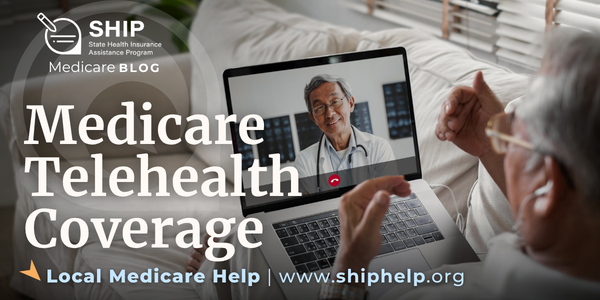
 Telehealth has become an essential part of how many older adults and caregivers access health care—offering convenience, flexibility, and a safe way to stay connected with providers. Medicare continues to cover a wide range of telehealth services, and several important flexibilities remain in place through December 31, 2027.
What Counts as Telehealth?
Telehealth is a full visit with a health care provider conducted by phone or video. It allows you to receive care without an in‑person office visit, making it easier to manage your health from home.
According to the Medicare Minute handout, telehealth can be used for services such as:
- Reviewing lab or imaging results
- Post‑surgical follow‑up
- Prescription management
- Preventive screenings
- Urgent care needs like colds or stomach issues
- Mental health treatment, including online therapy
- Managing recurring conditions like migraines or UTIs
- Evaluating skin conditions
As the handout explains, “Telehealth includes certain services that you receive from a health care provider outside of an in‑person office visit.”
Telehealth vs Virtual Check-ins
It’s helpful to know the difference:
- Telehealth visits are full appointments using two‑way audio and video.
- Virtual check‑ins are brief communications—like sending a photo, exchanging messages, or having a short phone call.
Medicare covers both, but they are not the same type of service.
Expanded Medicare Telehealth Flexibilities
Medicare’s telehealth rules changed significantly during the COVID‑19 Public Health Emergency, and many of those expanded options remain available through 2027. During this period:
- Telehealth is covered for all beneficiaries, not just those in rural areas.
- You can receive telehealth from home.
- Most services require audio and video, but some—such as behavioral health—may be provided audio‑only.
- A wider range of providers can offer covered telehealth services.
If you have a Medicare Advantage plan, check with your plan directly to understand its specific telehealth rules and costs.
What is Remote Patient Monitoring (RPM)?
Remote patient monitoring allows providers to track certain health data—such as blood pressure, heart rate, or blood glucose—from your home. This can help reduce unnecessary office visits and support ongoing care for chronic conditions.
However, the handout notes that RPM can sometimes be misused. Watch for red flags such as:
- Charges for monitoring you didn’t receive or agree to
- Offers of “free” devices in exchange for your Medicare number
- Companies contacting you without your provider’s involvement
- Phone calls from a doctor’s office later billed as RPM services
If something doesn’t feel right, trust your instincts.
Where to Get Help
- Talk with your doctor about whether telehealth or RPM is appropriate for your care.
- Contact SHINE (SHIP) at 866-413-5337 | shineinfo@aaaswfl.org with questions about Medicare coverage.
- Contact SMP at 866-413-5337 | shineinfo@aaaswfl.org if you suspect Medicare fraud, errors, or abuse.
Want More Details?
You can find a convenient handout with all the information summarized here.

The Medicare Rights Center is the author of portions of the content in these materials but is not responsible for any content not authored by the Medicare Rights Center. This document is supported by the Administration for Community Living (ACL), U.S. Department of Health and Human Services (HHS) as part of a financial assistance award totaling $3,000,000 with 100 percent funding by ACL/HHS. The contents are those of the author(s) and do not necessarily represent the official views of, nor an endorsement, by ACL/HHS, or the U.S. government.




Leave a Comment
Posted: May 1, 2026 by
Understanding Medicare’s Telehealth Coverage: What You Need to Know in 2026
What Counts as Telehealth?
Telehealth is a full visit with a health care provider conducted by phone or video. It allows you to receive care without an in‑person office visit, making it easier to manage your health from home.
According to the Medicare Minute handout, telehealth can be used for services such as:
As the handout explains, “Telehealth includes certain services that you receive from a health care provider outside of an in‑person office visit.”
Telehealth vs Virtual Check-ins
It’s helpful to know the difference:
Medicare covers both, but they are not the same type of service.
Expanded Medicare Telehealth Flexibilities
Medicare’s telehealth rules changed significantly during the COVID‑19 Public Health Emergency, and many of those expanded options remain available through 2027. During this period:
If you have a Medicare Advantage plan, check with your plan directly to understand its specific telehealth rules and costs.
What is Remote Patient Monitoring (RPM)?
Remote patient monitoring allows providers to track certain health data—such as blood pressure, heart rate, or blood glucose—from your home. This can help reduce unnecessary office visits and support ongoing care for chronic conditions.
However, the handout notes that RPM can sometimes be misused. Watch for red flags such as:
If something doesn’t feel right, trust your instincts.
Where to Get Help
Want More Details?
You can find a convenient handout with all the information summarized here.
The Medicare Rights Center is the author of portions of the content in these materials but is not responsible for any content not authored by the Medicare Rights Center. This document is supported by the Administration for Community Living (ACL), U.S. Department of Health and Human Services (HHS) as part of a financial assistance award totaling $3,000,000 with 100 percent funding by ACL/HHS. The contents are those of the author(s) and do not necessarily represent the official views of, nor an endorsement, by ACL/HHS, or the U.S. government.
Category: Government Agencies, Medicare, SHINE
search this site
popular pages
AAASWFL Programs & Services